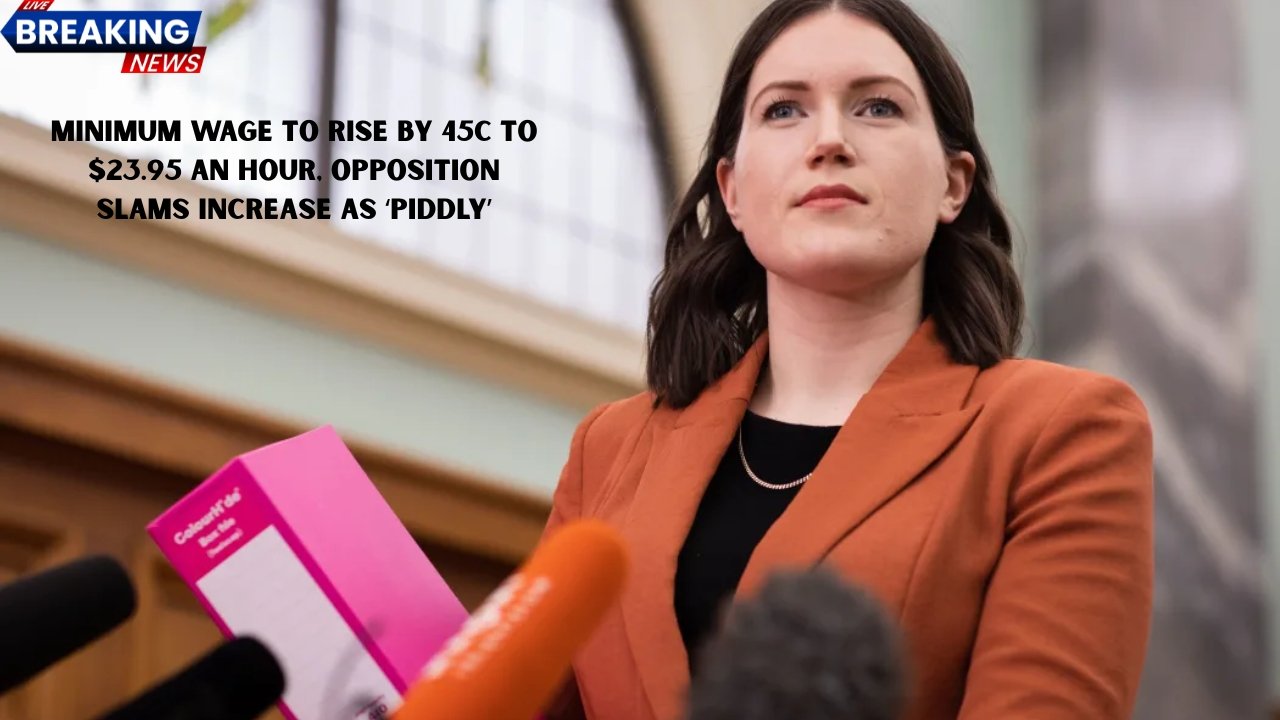
The minimum wage rise of 45 cents to 23.95 dollars an hour represents a modest but symbolically important increase for low‑paid workers, yet critics argue it falls far short of what is needed to keep pace with living costs. Opposition figures have branded the rise “piddly,” reflecting a wider debate over fairness, inflation, and the role of government in lifting wages sustainably.
What the Increase Means
Under the announced change, the adult minimum wage will rise by around 2 percent to 23.95 dollars an hour, taking effect from 1 April 2026 in the relevant jurisdiction. Government estimates suggest roughly 120,000 to 125,000 workers, primarily in lower‑paid sectors such as retail, hospitality, and services, are expected to benefit directly from the higher rate.
While 45 cents an hour may look small at first glance, it still delivers a predictable bump to weekly and yearly pay for those on the minimum. The increase also sends a political signal that the government is willing to adjust wages in response to cost‑of‑living pressures, even if many stakeholders consider the move too cautious.
Why Critics Call It ‘Piddly’
Opposition politicians and some unions argue that a 2 percent rise is inadequate when rent, food, power bills, and transport have risen much faster in recent years. They point out that even after repeated adjustments, statutory minimum wages in many advanced economies still lag behind widely accepted benchmarks for a living income relative to median earnings.

Using the term “piddly” frames the increase as more symbolic than substantial, implying it will barely dent financial stress for households already cutting back on essentials. From this perspective, the rise risks being seen as political window dressing that does little to close the gap between low‑paid workers and the rest of the workforce.
Cost‑of‑Living and Real Wages
The real impact of a minimum wage increase depends on inflation: if prices grow faster than wages, workers effectively go backwards. Analysts tracking minimum wages in countries like Australia note that past decisions have sometimes restored purchasing power temporarily, only for inflation to erode those gains before the next review.
For many low‑paid workers, essentials such as rent and food have taken a larger slice of income than a simple headline inflation rate suggests. Economic research also shows that when the minimum wage is too far below the median wage, the risk of in‑work poverty rises and more households struggle to meet basic needs without government transfers.
Snapshot of the New Rate
The table below illustrates how the new hourly rate of 23.95 dollars translates into weekly and annual earnings for someone working typical hours, and compares these amounts with the previous minimum. Figures are rounded and indicative only.
| Scenario | Old rate (23.50 dollars/hour) | New rate (23.95 dollars/hour) | Difference in pay |
|---|---|---|---|
| Hourly pay | 23.50 dollars | 23.95 dollars | 0.45 dollars |
| 40‑hour week | 940 dollars | 958 dollars | 18 dollars |
| 52‑week year (40 hours/week) | 48,880 dollars | 49,816 dollars | 936 dollars |
These figures show that while the hourly change looks small, the annual difference approaches 1,000 dollars for a full‑time worker on the legal minimum. For part‑time and casual workers, the absolute gain is smaller, but still meaningful for those living close to the edge.
Business Concerns and Employment
Employer groups typically caution that significant wage rises can increase costs for small businesses, particularly in labour‑intensive sectors with tight margins. Some business advocates argue that even a modest bump like this could squeeze firms already dealing with higher interest rates, rent, and input prices, potentially discouraging hiring or prompting cuts in hours.
However, a growing body of international research indicates that carefully calibrated minimum wage increases have limited negative effects on employment and can even support demand by boosting the spending power of low‑paid workers. In many cases, businesses adapt through small price adjustments, productivity improvements, or reduced staff turnover rather than outright job losses.
Broader Economic and Social Impact
Raising the minimum wage touches more than just immediate pay packets; it also shapes income distribution, poverty rates, and social cohesion. When statutory wages track closer to a living‑wage benchmark, fewer workers need to rely on government welfare or multiple jobs to get by, which can reduce strain on public budgets and social services over time.
At the same time, the small size of the current increase means it is unlikely to trigger significant inflation on its own, given the relatively limited share of workers directly on the legal minimum. The broader inflation outlook will depend more on factors such as energy prices, housing markets, monetary policy, and global supply conditions than on this single wage decision.
What Happens Next
Debate over the “piddly” rise underscores a deeper argument about how aggressively governments and wage‑setting bodies should act to lift low pay. Worker advocates are likely to push for faster, multi‑year increases, while business groups continue to call for restraint and more targeted cost‑of‑living support such as tax relief or subsidies.
Future reviews will probably weigh evidence on employment, business health, and living standards to judge whether 23.95 dollars is a stepping stone toward a genuine living wage or simply another small adjustment that leaves structural problems intact. For workers on the minimum, the question remains whether each annual decision moves them meaningfully closer to economic security or merely slows the pace at which they fall behind.
SOURCE
FAQs
Q1: When will the new 23.95 dollar minimum wage take effect?
It is scheduled to apply from 1 April 2026 in the jurisdiction where the change has been announced, subject to any final legislative or regulatory steps.
Q2: How many workers will benefit from the increase?
Government figures indicate that around 122,500 adult workers on the minimum rate are expected to be covered directly by the 23.95 dollar wage.
Q3: Why do some people oppose the rise?
Opponents argue the 45‑cent increase is too small to offset rising living costs and worry about added pressure on small businesses, while supporters see it as a necessary, if modest, step to help low‑paid workers.