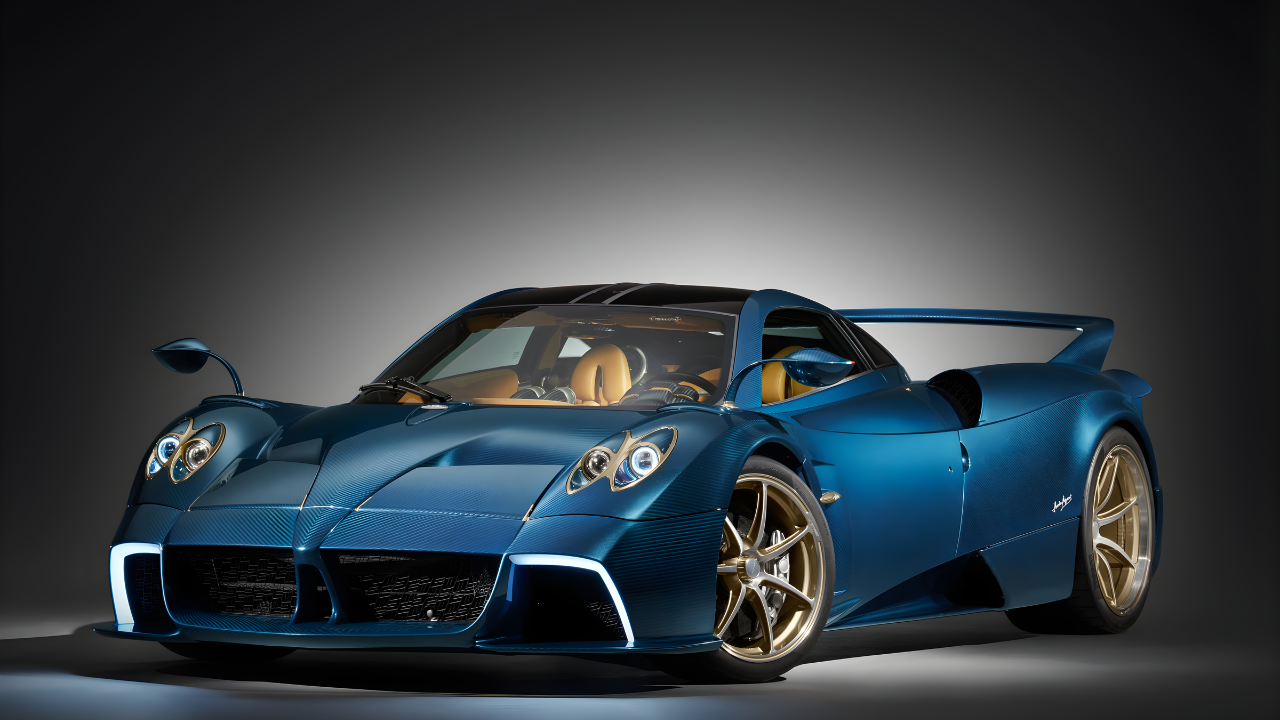
The Pagani Huayra has always stood at the crossroads of art and engineering, and the 2026 chapter pushes that idea even further into the realm of collectable sculpture on wheels. Pagani continues to refine its V12 formula while exploring new body styles and even more exclusive series that turn every car into a rolling piece of coachbuilt art. Limited production, obsessive attention to detail, and a design language rooted in both aerodynamics and Italian craftsmanship ensure that any 2026 Huayra derivative will be far more than just another fast car.
Design Philosophy: Sculpted Speed
The design direction for current and upcoming Huayra variants leans heavily on timeless proportions inspired by classic endurance racers, blended with the organic, wind‑carved forms that defined the original Huayra. The Codalunga body style, which stretches the tail into a more elongated, fluid shape, showcases how Pagani uses form to manage high‑speed airflow while maintaining elegance. Every visible component serves a function, from the active flaps that fine‑tune downforce to the intricate exposed titanium fasteners and machined aluminum switchgear in the cabin, all reflecting Horacio Pagani’s belief that beauty and performance must coexist.
V12 Power and Performance
At the heart of the Huayra story remains a 6.0‑liter Mercedes‑AMG‑derived V12, a configuration Pagani has vowed to keep developing through at least 2026. In hardcore track‑focused versions such as the Huayra R and subsequent evolutions, bespoke naturally aspirated V12 units have already pushed output into the 838–850 hp range, paired with screaming 9,000 rpm redlines and race‑grade sequential gearboxes designed purely for visceral engagement. Road‑legal derivatives like the Huayra Codalunga Speedster, due for deliveries starting in 2026, complement this with a twin‑turbo V12 tuned to around 864 hp and 811 lb‑ft of torque, offering sub‑3‑second 0–100 km/h runs and top speeds above 340 km/h while still being drivable on public roads.
Key 2026 Huayra Codalunga Speedster Numbers
| Specification | Value |
|---|---|
| Engine | 6.0‑liter twin‑turbo V12 |
| Power | 864 hp (approx.) |
| Torque | 811 lb‑ft |
| 0–100 km/h | About 2.8–3.1 seconds |
| Top speed | Around 349 km/h (217 mph) |
| Transmission | 7‑speed manual or semi‑auto |
| Drive layout | Rear‑wheel drive |
| Planned production | 10 units worldwide |
Lightweight Engineering and Materials
Pagani’s signature combination of carbon‑titanium and carbo‑triax composites continues to be central to the Huayra’s structure, allowing extremely high rigidity with impressively low weight. The Codalunga Speedster targets roughly 1,260 kg, delivering a power‑to‑weight figure in excess of 640 hp per tonne, a ratio normally associated with top‑level racing machinery rather than road‑legal art objects. Track‑only evolutions like the Huayra R Evo go even further, dipping close to 1,060 kg dry and generating around 1,400 kg of aerodynamic load at speed, effectively pressing the car into the tarmac for immense cornering grip.
Driving Experience: Art You Can Feel
The Huayra driving experience is deliberately analog in an increasingly digital world, with a focus on mechanical feel and driver involvement over layers of electronic filters. Pagani’s choice of lightweight single‑clutch or automated‑manual transmissions instead of heavier dual‑clutch systems preserves both character and responsiveness, sacrificing a touch of smoothness for a more connected, race‑car‑like sensation on upshifts and downshifts. The steering, seating position, and pedal layout are tuned to make the driver feel like part of the chassis, while optional programs such as “Arte in Pista” give owners of track‑only Huayra R variants access to professional coaching and dedicated pit crews at world‑class circuits.
Exclusivity and Collectability
Production numbers for any Huayra built around 2026 remain extremely limited, with bespoke runs often capped at five or ten units and tailored individually to each client through the Grandi Complicazioni division. With prices that can exceed 7 million dollars before personalization, these cars are aimed at collectors who value emotional impact and craftsmanship as much as outright performance benchmarks, making each example a long‑term cultural and financial investment in the hypercar world.
Looking Beyond 2026
Pagani has already confirmed development of a Huayra successor, sometimes referenced under internal code names such as C10, which will carry forward the brand’s V12 heritage while coexisting with a future all‑electric model. The strategy is to keep the combustion‑engined flagship alive through at least 2026 with homologated AMG V12 powertrains, while gradually introducing new technologies and possibly light hybrid assistance in later projects to meet regulations without diluting the raw character that defines the brand today.
FAQs
Q1: Is the Pagani Huayra Codalunga Speedster road legal in 2026?
Yes, Pagani states that the Codalunga Speedster will be fully homologated for worldwide road use, with deliveries beginning in 2026.
Q2: How many 2026 Huayra Codalunga Speedsters will be built?
Pagani plans to build only ten units, making it one of the rarest Huayra variants ever produced.
Q3: Does Pagani plan to stop using V12 engines after 2026?
Pagani has indicated it will continue building V12 hypercars up to around 2026, after which future models may blend traditional V12 power with new technologies or coexist alongside an EV.
Disclaimer
The content is intended for informational purposes only and may not reflect the very latest manufacturer updates; for final specifications, pricing, and availability, users should always consult official Pagani sources. Our aim is to provide accurate information to all users.