
Valarra is a wild, 1,600-horsepower reinterpretation of the humble C6 Corvette, built to hit hypercar numbers while starting from a relatively attainable donor chassis. With a radical widebody kit and a twin-turbo V8 tuned deep into four-digit power, this machine exists to embarrass traditional supercars on the street and the strip.
From Corvette To Hyper-Machine
At its core, the Valarra is not a ground-up carbon-tub hypercar, but a heavily re-bodied and re-engineered Chevrolet Corvette C6 from the 2005–2013 era. The project starts with a standard C6 chassis and transforms it using a complete custom body kit and extensive mechanical upgrades, keeping only a few original panels like the targa roof and glass in some builds.
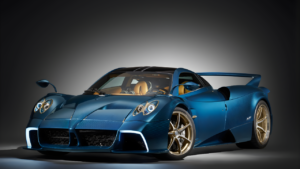
The kit itself was penned by Matthew Mcentegart of Mattao Concepts, the same designer behind the Vaydor kit that gained fame on the big screen, and it aims to deliver exotic supercar presence at a fraction of OEM supercar prices. Aggressive proportions, forged carbon accents, and outrageous wheel and tire sizes make it almost unrecognizable as a Corvette from the outside.
Design That Screams Supercar Slayer
Visually, the Valarra abandons the familiar Corvette curves in favor of sharp, angular surfacing, deep vents, and a massive rear wing coupled with an oversized diffuser. Wide rear arches house ultra-wide wheels wrapped in tires as big as 405/25R24 at the back, giving the car a stance more in line with bespoke hypercars than mass-produced sports cars.
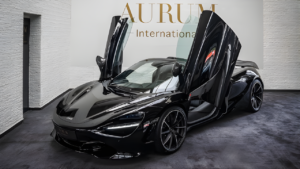
Forged carbon fiber elements extend across the hood vents, side skirts, and aero details, creating both a technical look and real weight savings compared with steel panels. Combined with custom lighting and relocated exhaust outlets, the end result is a car that turns heads even in crowds filled with Lamborghinis and McLarens.
Engine, Boost, And 1,600 Horsepower
The most extreme Valarra builds swap the stock LS3 V8 for a Dart-based iron block V8, enlarged to around 430 cubic inches and assembled with forged internals capable of handling 2,200–2,400 horsepower. A pair of large-frame turbochargers, such as Comp 7675 units, feed boost through a custom-fabricated kit with performance wastegates and blow-off valves to manage immense airflow.
On moderate boost levels around 18 psi, these cars have already been recorded at roughly 1,200 wheel horsepower, with headroom to push into the 1,500–1,600 horsepower zone once the tune is fully turned up. Running on E85 flex-fuel with upgraded fueling and engine management, the package is engineered not only for peak dyno numbers but also for consistent, repeatable power delivery.
Performance Snapshot
| Spec / Feature | Typical Valarra Build Value | Source |
|---|---|---|
| Base chassis | 2005–2013 Corvette C6 | |
| Engine platform | Dart-block LS-based V8 | |
| Displacement (approx.) | 430 cubic inches | |
| Induction | Twin-turbo, custom kit | |
| Wheel horsepower (low boost) | ~1,200 WHP | |
| Potential peak power | 1,500–1,600 HP | |
| Rear tire size | 405/25R24 | |
Handling, Drivability, And Safety
Despite its outlandish power levels, owners and builders describe the Valarra as surprisingly streetable when tuned conservatively, cruising at highway speeds with low rpm and manageable manners. Upgraded transmissions, differentials, torque tubes, and supporting hardware are essential to cope with the torque load and deliver reliability under hard acceleration.
Chassis enhancements often include a full roll cage, performance seats, harnesses, and even integrated fire suppression systems rated for ethanol and methanol fuels, reflecting the race-bred nature of these builds. Massive brakes, sticky tires, and carefully selected suspension components help the car put power down and retain control when boost comes in aggressively.
Why It Embarrasses Supercars
In real-world pulls and drag-style accelerations, a fully turned-up Valarra can outrun many factory supercars that cost three to four times as much. Twin-turbo response, jet-like exhaust note, and flame-throwing two-step antics add to the sense that this is more a street-legal race car than a typical tuner build.
What makes it especially intimidating is the combination of show and go: radical styling announces its presence, while the dyno numbers and on-road performance back up the looks with genuine, repeatable speed. For enthusiasts who value raw power over brand prestige, the Valarra offers a way to dominate roll races, highway pulls, and events where sheer acceleration matters most.
The Trade-Offs And Practical Considerations
Building a 1,600-horsepower Valarra is not a casual project, as many cars have hundreds of labor hours invested in fabrication, tuning, and finishing work. Costs rise quickly once you factor in the donor Corvette, body kit, forged engine, turbo system, driveline upgrades, paint, and interior modifications.
There are also compromises in everyday practicality, from reduced ground clearance and limited visibility to the need for meticulous maintenance on a high-strung powertrain. Still, for a subset of enthusiasts, those trade-offs are acceptable in exchange for owning a truly unique machine that can rival or surpass hypercar performance without carrying a factory badge.
Future Of Extreme Valarra Builds
The growing number of social media clips, short videos, and feature articles suggests that the Valarra platform is becoming a canvas for increasingly extreme builds. As tuning shops refine turbo packages, fuel systems, and engine configurations, there is room for even more reliable four-digit power and better integration of electronics and driver aids.
At the same time, the underlying C6 Corvette remains an accessible starting point, keeping the concept of a “supercar killer” within reach of dedicated builders rather than just billionaire collectors. That mix of accessibility, creativity, and outright insanity is what allows the 1,600-horsepower Valarra to stand out in a world crowded with factory-built exotics.
FAQs
Q1: Is the Valarra an official production car?
No, it is a custom build based on a Corvette C6 using an aftermarket body kit and extensive performance modifications.
Q2: Can a Valarra be driven on the street?
Many builds are registered and street driven, but legality and practicality depend on local regulations and how extreme the modifications are.
Q3: How much does a Valarra cost to build?
Total cost varies widely with parts and labor, but high-power builds can easily reach or exceed the price of a new high-end sports car.
Disclaimer
The content is intended for informational purposes only. You can check the official sources; the aim is to provide accurate information to all users.